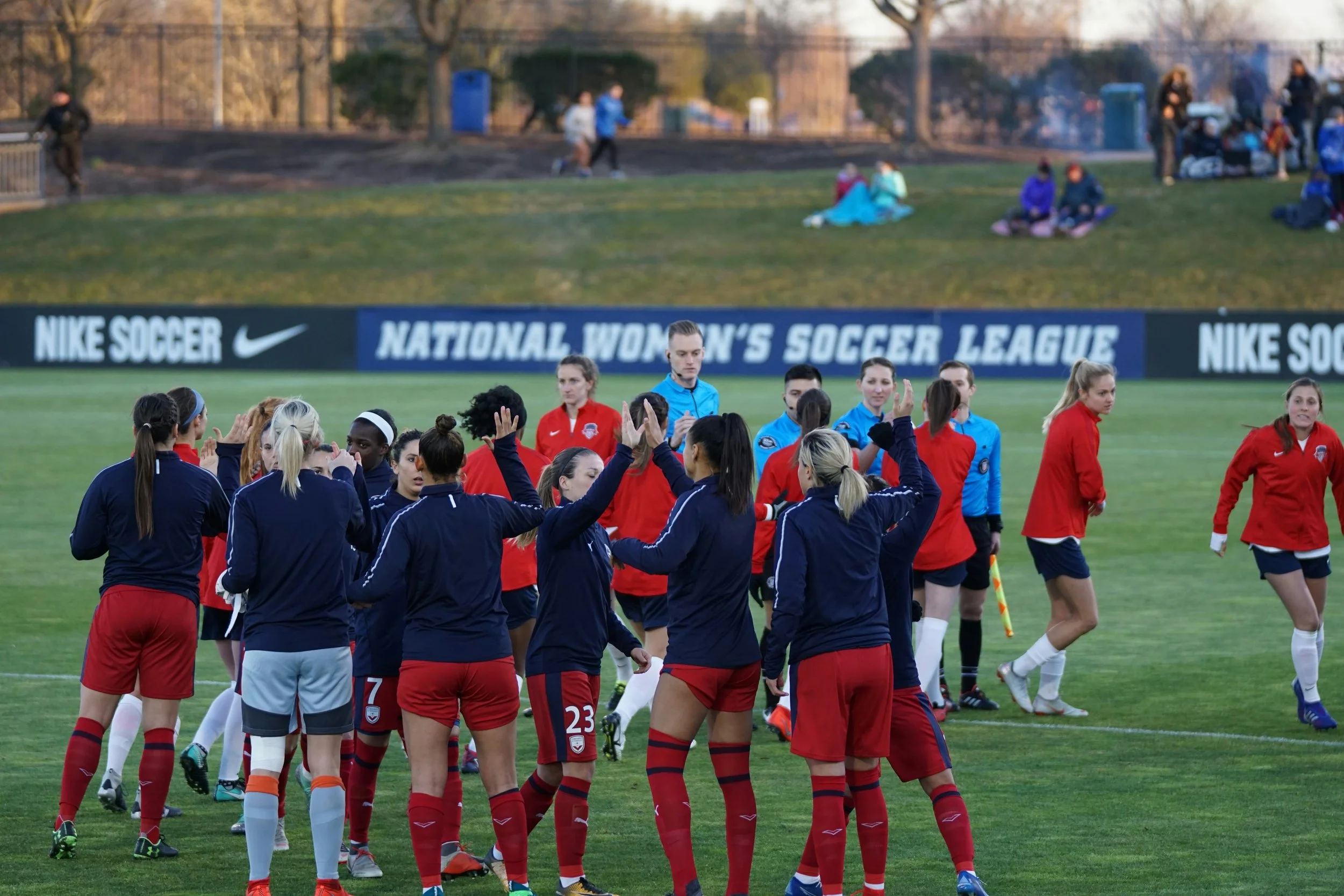
National Women’s Soccer League and Nike
For years, women’s sports was treated like a “nice-to-have” marketing category.
Good for PR.
Good for optics.
Worth supporting—if budget allowed.
That era is over.
Women’s sports is no longer a trend, side conversation, or experimental media buy. It’s now a legitimate growth category with expanding audiences, rising media value, strong fan engagement, and real commercial upside. Brands that recognize this shift early are going to look smart in the years ahead.
The Numbers Are Too Big to Ignore
You don’t need a research deck to see what’s happening.
Global women’s sports revenue nearly doubled from $981 million in 2023 to $1.88 billion in 2024, with projections reaching $2.35 billion in 2025. That’s not niche growth—it’s category growth.
WNBA Growth Is Driving National Attention
The WNBA set attendance records in 2024, topping 2.5 million fans, while overall attendance increased nearly 50% year over year.
Games featuring Caitlin Clark generated major ratings spikes and nonstop conversation. Angel Reese brought a new wave of personality, rivalry, and fan energy. Teams like the Chicago Sky became must-watch in markets like Chicago.
It’s Bigger Than Basketball
The National Women's Soccer League continues to grow attendance, sponsor demand, and media value. Its new media rights deal reportedly increased annual value from roughly $1.5 million to $60 million per year.
Stars like Sophia Smith and Trinity Rodman are becoming crossover names.
College Women’s Sports Are Booming
The 2024 NCAA women’s championship game drew 18.9 million viewers, outperforming the men’s final.
This isn’t random. It’s momentum.
Why Brands Are Paying Attention
Women’s sports offers several advantages many media categories struggle to deliver today:
1. Passionate Fans
These audiences are engaged, vocal, loyal, and emotionally invested.
2. Cultural Relevance
Women’s sports increasingly sits at the center of conversations around competition, leadership, identity, equity, style, and entertainment.
3. White Space for Sponsors
Many men’s leagues are crowded with advertisers. Women’s sports still gives brands room to stand out instead of blending in.
4. Powerful Athlete IP
Athletes today are more than athletes.
Simone Biles, Coco Gauff, Alex Morgan, and A'ja Wilson all carry influence beyond competition.
That matters to marketers.

The Bigger Opportunity: Women’s Niche Sports
Most marketers are finally waking up to women’s basketball and soccer.
But the next wave of opportunity may be even more interesting: women’s niche sports with built-in passionate communities.
Think:
Rodeo
Softball
Volleyball
Gymnastics
Lacrosse
Surfing
Skateboarding
Motorsports
Equestrian
These categories may not always deliver NFL-sized ratings—but they often deliver something just as valuable.
Highly Loyal Audiences
Fans don’t casually follow these sports. They identify with them, attend events, buy merchandise, and support brands that support the lifestyle.
Less Sponsorship Clutter
In many niche sports, brands can own the conversation rather than fight for scraps in oversaturated leagues.
Strong Regional Power
Women’s rodeo, for example, can carry major influence in states like Texas, Oklahoma, Colorado, and Arizona.
Barrel racers often have highly engaged fan bases and authentic social followings.
Natural Lifestyle Alignment
Western sports connect naturally to categories like:
Automotive
Retail
Quick-service restaurants
Beauty
Agriculture
Outdoor gear
Finance
Family brands
Wellness
Lower Cost to Enter
You don’t need a nine-figure media budget to make an impact. Smart brands can enter earlier, build credibility faster, and scale over time.
What Smart Brands Are Doing Differently
They’re not treating women’s sports like charity.
They’re treating it like growth.
That means:
Sponsoring teams early
Investing in athlete partnerships
Building creator-style content around stars
Activating locally in priority markets
Showing up consistently—not just during headline moments
The Wrong Question Brands Still Ask
Some companies still ask:
“Is the audience big enough yet?”
Wrong question.
A better question is:
“Is the audience growing, engaged, and more affordable to reach now than it will be later?”
That answer is clearly yes.
Final Thought
The smartest marketers don’t wait until something is fully mature and expensive.
They identify where culture is headed and move early.
Women’s sports is no longer emerging.
It’s here.
And increasingly, it’s where smart sponsorship dollars are going.